
Circuit Breaker Repair in the USA
Our technicians respond to Circuit Breaker Repair calls by first verifying the main service disconnect is off before any panel cover is removed. They measure incoming voltage at the lugs, check for signs of overheating on the bus stabs, and record the amperage draw on each branch circuit with a clamp meter. This sequence identifies whether the problem originates from a single breaker, shared neutral, or an undersized feeder.
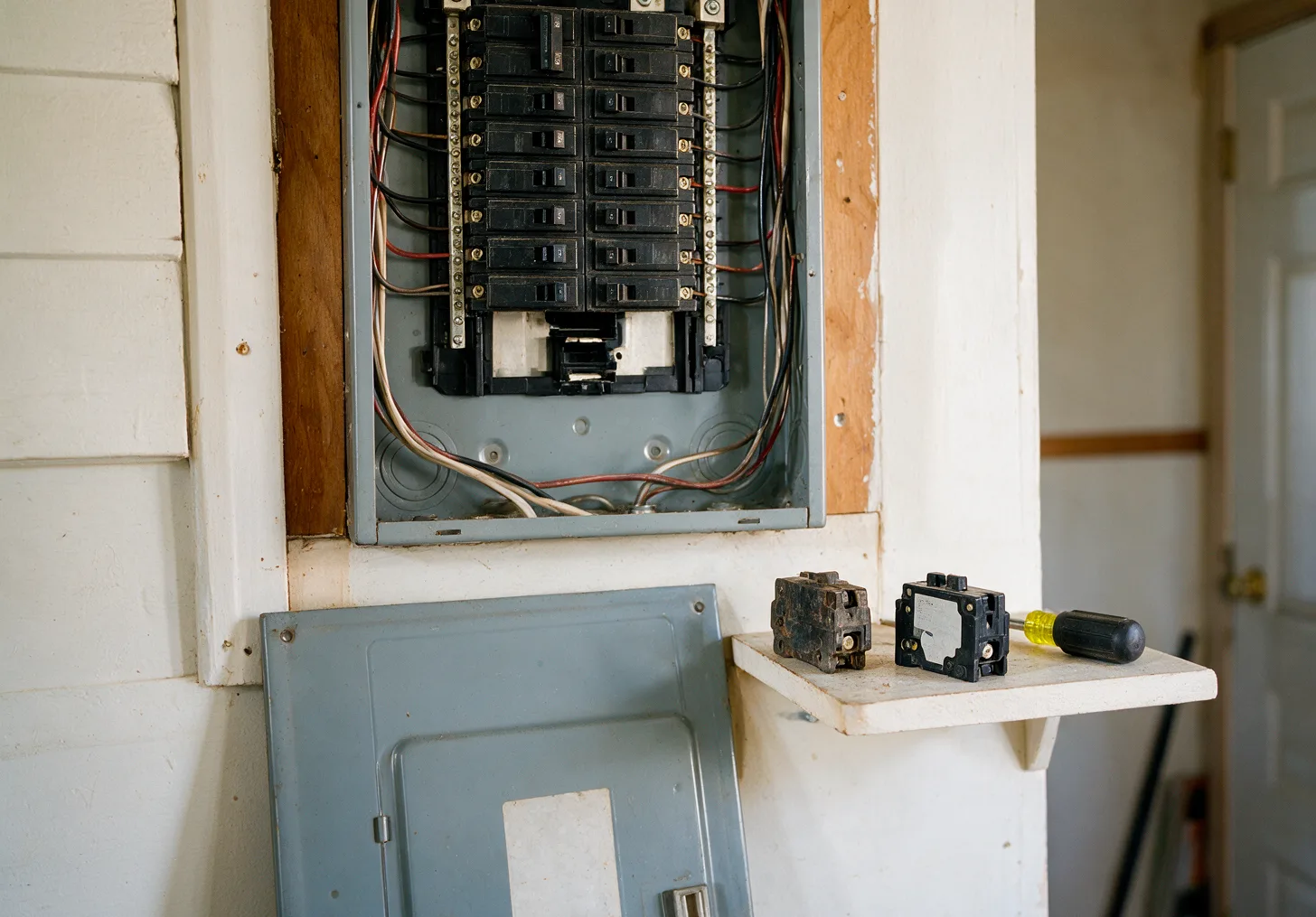
Once the panel interior is exposed, visible damage such as melted insulation, carbon tracking on the breaker case, or corroded terminals receives immediate attention. Replacement choices include standard thermal-magnetic breakers, combination AFCI units for bedroom circuits, or GFCI breakers where required by code. All new breakers are torqued to manufacturer specifications and labeled before the cover is reinstalled. Calls about circuit breaker repair reach Ikon Electrical Services from all over the USA.
Warning Signs of Circuit Breaker Problems
- Breaker trips immediately after reset with no load attached.
- Burnt plastic odor or discolored breaker handles near the panel.
- Lights dim or flicker when large appliances start.
- Warm or hot spots detected on the panel cover by touch.
- Frequent need to reset the same breaker without added loads.
Common Causes Leading to Breaker Replacement
Sustained overloads above the breaker rating cause the thermal element to weaken over time until it no longer holds the rated current. Short circuits from damaged wiring create magnetic trip events that can pit the contacts inside the breaker. Arc faults from loose connections or damaged cords trigger electronic detection circuits in AFCI models.
Corrosion on the bus bar stabs increases resistance and generates heat that warps the breaker housing. Age-related spring fatigue in the trip mechanism prevents proper latching. Undersized breakers installed during prior renovations fail when modern appliance loads exceed original design capacity.
Measurements and Checks Performed on Site
Technicians record line-to-neutral and line-to-ground voltage at the main lugs with the cover removed. They use an infrared thermometer to scan each breaker for temperature differentials greater than ten degrees from adjacent units. Torque values on all terminal screws are verified against the panel schedule.
Insulation resistance between each branch conductor and ground is measured with a megohmmeter before any breaker is reinstalled. Ground fault and arc fault test buttons on existing AFCI or GFCI breakers are operated to confirm they still function. Neutral bar connections are inspected for looseness that can create parallel paths and nuisance trips.
Repair and Replacement Procedures Used
When only the breaker is damaged, the existing wire is disconnected, the old unit is removed from the stab, and a new breaker of identical amperage and type is seated. The load conductor is reattached and torqued. For panel upgrades, the main breaker and all branch breakers are replaced while the existing enclosure remains if the bus rating allows.
Tandem or quad breakers are installed only where the panel labeling explicitly permits them and where the neutral and ground paths remain separate. New breakers carry the same interrupting rating as the original equipment. After re-energizing, each circuit is loaded to 80 percent of its rating for several minutes to confirm stable operation.
Steps Homeowners Take Before Arrival
Homeowners should note which circuits lose power and whether the breaker resets or trips again immediately. They must not remove the panel cover or attempt to touch any internal components. Power to unaffected areas can remain on provided no burning smell or warmth is present at the panel.
Appliances on the affected circuit should be unplugged to reduce load. If water has entered the panel area or if the main breaker shows visible damage, the entire service should stay off until technicians arrive. Written records of recent electrical work or appliance additions help narrow the diagnosis.
Circuit Breaker Repair questions
Can a tripped breaker be reset safely?
A single reset is acceptable after unplugging loads from the circuit. Repeated resets without identifying the cause can damage wiring or start a fire. Our technicians locate the underlying overload, short, or ground fault before any permanent correction.
What parts are typically replaced during repair?
Technicians replace the failed breaker with a new unit of matching amperage and trip characteristics. In some cases the breaker mounting clip or a section of damaged wire is also renewed. All replacement parts match the panel manufacturer specifications.
Is it safe to open the panel myself?
No. Removing the cover exposes live bus bars and requires tools and training to avoid arc flash or shock. Homeowners must leave panel access to qualified personnel who follow lockout procedures and wear appropriate protective equipment.
How long does Circuit Breaker Repair usually take?
Most single-breaker replacements are completed within one hour once the panel is de-energized. Full panel inspections that include multiple measurements and several breaker changes extend the visit to two or three hours depending on access and circuit count.
Schedule Circuit Breaker Repair
Contact Ikon Electrical Services for Circuit Breaker Repair performed by technicians who test, measure, and replace components across the USA.