
Outlet and Switch Repair in the USA
Our technicians respond to calls about outlets and switches that fail to deliver power or produce intermittent connections. They first verify that the branch circuit breaker is in the on position and test voltage at the device terminals with a multimeter. Only after confirming power presence do they remove the cover plate and examine wire terminations for signs of heat or looseness.
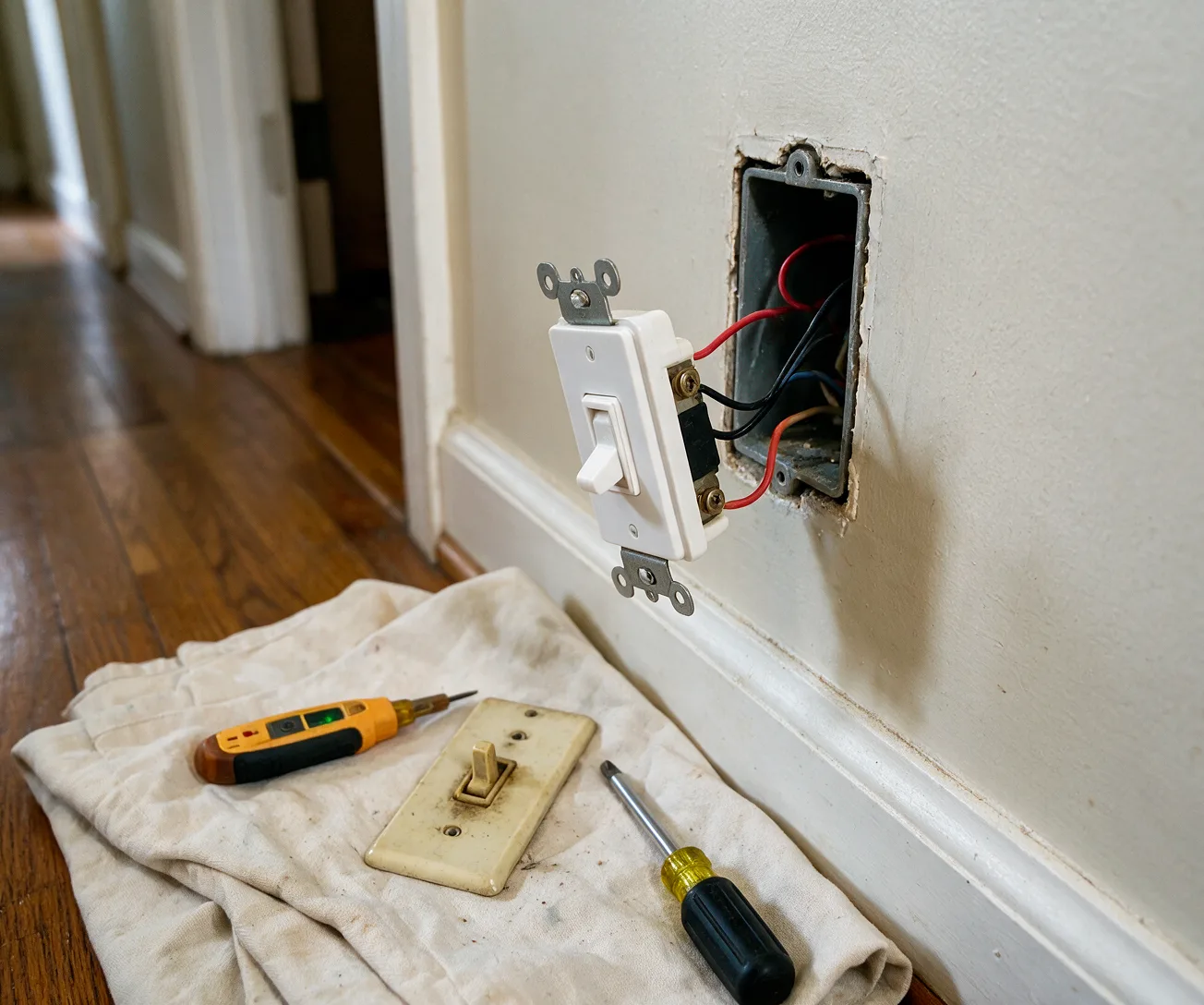
Homeowners can safely turn off the circuit breaker that serves the affected outlet or switch before any inspection. They should never remove the device yoke or touch exposed conductors. Once power is isolated the cover plate may be removed to look for discoloration or melted plastic on the device body. Outlet and switch repair is part of what Ikon Electrical Services does across the USA.
Warning Signs of Outlet or Switch Issues
- Outlet face feels warm when a load is plugged in for several minutes
- Switch toggle requires extra pressure to change position
- Visible black marks or melted plastic around the device edges
- Lights flicker only when a particular switch is operated
- Sparks appear when a cord is inserted or removed from the receptacle
Common Causes of Outlet and Switch Failures
Repeated insertion and removal of plugs wears the spring tension inside a receptacle so that the contacts no longer grip the prongs firmly. This creates arcing that carbonizes the metal and raises resistance. Over time the heat can damage the surrounding insulation or the device itself.
Switches fail when the internal contact points pit from arcing under load. Dimmer switches add electronic components that can overheat if the wattage rating is exceeded. Both conditions leave the switch unable to maintain a consistent circuit path.
Backstabbed connections where wire is pushed into spring clips rather than wrapped under screw terminals often loosen after thermal cycling. The resulting high-resistance joint generates heat that further weakens the connection until the device stops working.
Inspection Steps Performed by Our Technicians
Technicians begin by measuring voltage between hot and neutral at the outlet or switch location with the device still installed. They then de-energize the circuit, remove the device, and perform a visual check for scorched terminals or insulation damage. Continuity testing follows on the switch contacts and receptacle jaws.
Grounding integrity is verified by measuring resistance between the device yoke and the equipment grounding conductor. Technicians also inspect the conductor insulation for nicks or heat damage and confirm that the wire gauge matches the circuit breaker rating before any reconnection.
When outlets share a circuit with lighting, technicians isolate the branch by turning off adjacent breakers to rule out shared neutrals or crossed wiring that can cause voltage drop or intermittent operation.
Repair and Replacement Options
If terminals are merely loose they are cleaned and retightened to the manufacturer torque specification. When contact surfaces are pitted or the device body is cracked the entire unit is replaced. Replacement always uses devices rated for the circuit amperage and includes tamper-resistant receptacles where required.
For switches controlling loads over 600 watts a standard toggle is upgraded to a heavier-duty model with higher contact ratings. Three-way and four-way switches are replaced as matched sets when one fails to maintain traveler continuity.
If wiring damage is found inside the box our technicians extend new conductors using approved connectors and junction boxes rather than splicing inside the device yoke. This restores full ampacity without leaving splices inaccessible.
Materials and Parts Used
Receptacles are selected from commercial-grade lines with reinforced thermoplastic bases and brass terminal screws. These accept both solid and stranded conductors and maintain grip force longer than residential-grade units. Grounding clips are added when the box is non-metallic.
Switches carry the same commercial rating and include screw terminals sized for 12 AWG and 14 AWG wire. Where a neutral is present for future smart-switch use, the replacement device is chosen to preserve that conductor.
Cover plates are non-conductive nylon or thermoset material that resists cracking when screws are tightened. All hardware is zinc-plated to resist corrosion in damp locations even when the device itself is installed in a dry interior space.
Outlet and Switch Repair questions
Can a homeowner replace an outlet without turning off the breaker?
No. The circuit must be isolated at the breaker panel first. Working on an energized device risks shock and arc flash. Once power is confirmed off with a voltage tester the device can be removed and the wires identified before any new connections are made.
Why do outlets sometimes stop working on only one side?
Many receptacles are split so that each half is fed by a separate hot conductor or by a switched leg. A loose terminal screw or a tripped half of a two-pole breaker can leave one side dead while the other remains live. Our technicians trace the wiring to determine which condition exists.
Is it necessary to replace both switches in a three-way circuit?
Only the failed switch needs replacement if the travelers and common terminal are correctly identified. However both switches are tested for continuity because age-related wear often affects the second device shortly after the first fails.
What type of outlet should replace a standard one in a bathroom?
A GFCI receptacle or a GFCI-protected downstream device is required. The replacement includes a test and reset button and is installed with line and load conductors separated so that protection covers all outlets on the same circuit.
Schedule Outlet and Switch Repair
Contact Ikon Electrical Services to have our technicians inspect and correct outlet and switch problems across the USA.