
Wiring and Rewiring in the USA
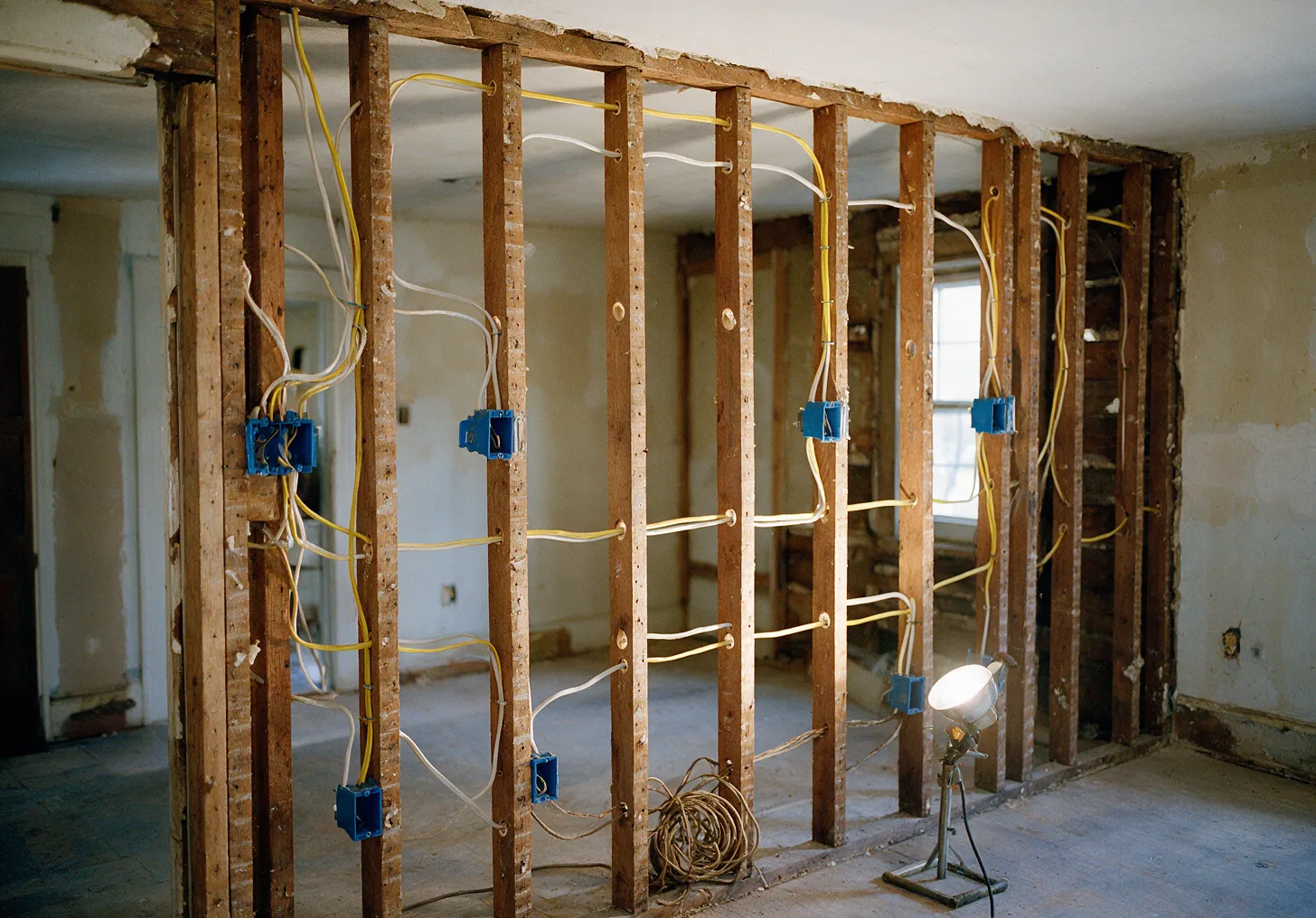
Wiring and Rewiring addresses conductors that no longer meet current load demands or show insulation breakdown. Our technicians trace circuits from the panel to outlets and fixtures, then decide whether to splice in new runs or pull entirely new cable. Common materials include 12 AWG and 10 AWG THHN or NM-B cable rated for the amperage present. Every replacement includes torque verification on terminals and testing for proper grounding continuity.
Homeowners should first locate the main breaker and note which rooms lose power when it is switched off. Avoid opening the panel or handling any wires inside walls. Turn off affected breakers only if the handles move freely and no burning smell is present. Document which lights or outlets stop working so our technicians can map the circuit quickly upon arrival. Need wiring and rewiring? Ikon Electrical Services answers from anywhere in the USA.
Warning Signs of Wiring Problems
- Lights dim or flicker when large appliances start
- Outlets feel warm or show brown scorch marks
- Breakers trip repeatedly on the same circuit
- Aluminum wiring appears at outlets or switches
- Extension cords remain necessary for normal use
Common Causes of Wiring Failure
Overloaded circuits from added outlets or high-draw equipment cause copper conductors to heat and loosen terminations over time. Rodents chew through insulation and create short paths to ground. Original two-wire systems lack equipment grounding conductors required by later code cycles. Moisture intrusion in attics or crawl spaces corrodes splices and reduces dielectric strength of the insulation.
Aluminum branch wiring installed before 1972 expands and contracts differently than copper, leading to loose connections at devices. Nail or screw penetrations during remodeling pierce cable jackets and create intermittent faults. These conditions produce measurable voltage drop and elevated resistance that our technicians detect with calibrated meters.
Inspection and Measurement Steps
Technicians begin at the service panel by measuring voltage under load at each breaker and recording temperature rise with an infrared thermometer. They then remove outlet and switch covers to inspect for aluminum conductors, double-tapped neutrals, and back-stabbed connections. A megohmmeter test checks insulation resistance between conductors and ground before any new cable is installed.
Load calculations determine whether existing 15-amp circuits can support added receptacles or if new 20-amp homeruns are required. Grounding electrode connections are verified for continuity back to the main bonding jumper. These measurements establish whether partial rewire of specific rooms or a full service upgrade is the appropriate scope.
Repair and Installation Options
When only a few circuits are affected, technicians fish new NM-B cable through existing walls or run surface-mounted conduit where access is limited. Full rewires involve pulling all branch circuits back to the panel and installing new grounded receptacles and switches. AFCI protection is added on bedroom circuits and GFCI protection on kitchens and bathrooms as required by current standards.
Materials remain limited to copper conductors sized for the breaker rating, listed connectors, and boxes with adequate cubic-inch capacity. No existing aluminum wiring is extended with copper unless CO/ALR rated devices are used. All new work receives a final torque audit and polarity test before the circuit is energized.
Homeowner Preparation Steps
Clear access to every outlet, switch, and the main panel by moving furniture at least three feet away. Make a list of which rooms lose power when individual breakers are turned off and note any recent appliance additions. Do not attempt to open junction boxes or test wires with a non-contact voltage tester if you are unsure of the circuit path.
Identify the location of smoke detectors and any hardwired appliances so power can be isolated without affecting safety devices. Leave all covers in place until our technicians arrive. These steps allow direct focus on the conductors rather than locating hidden access points.
Wiring and Rewiring questions
How do technicians decide between repair and full rewire?
They calculate existing load against conductor size, test insulation resistance, and inspect every accessible termination. When multiple circuits show high resistance or aluminum wiring, a full rewire is recommended over repeated splices that leave older cable in place.
What materials are used for new wiring runs?
Copper THHN or NM-B cable sized to the breaker rating, listed boxes with proper volume, and torque-rated connectors. Grounding conductors are installed on every new circuit and connected to the panel ground bus.
Can homeowners safely turn off breakers before arrival?
Yes, if the breaker moves freely and no burning odor exists. Do not open the panel cover or touch any wires inside. Note which devices lose power so the affected circuit can be identified quickly.
Is partial rewire an option when only one room is affected?
Yes, when load calculations confirm the remaining circuits meet code and insulation tests pass on unaffected runs. New cable is fished or surface conduit is installed to serve only the rooms requiring updated conductors.
Schedule Wiring and Rewiring
Contact Ikon Electrical Services to assess your circuits and determine the correct scope of Wiring and Rewiring across the USA.